Tuesday, February 19, 2013

Manuel has managed talent, but few HoFers

By Matthew Osborne
@trentonianozzy

An interesting question was raised on the radio this week about how many Hall of Famers Charlie Manuel has had the pleasure of managing in his Phillies tenure, versus how many Dallas Green had in the early 1980s.
Green had Mike Schmidt, Steve Carlton and Pete Rose as a pretty good triple threat Hall of Fame core.
(Yes, we’re going to count Rose here for these purposes. He’s not banned for steroids or anything that helped his performance on the field. If he were named eligible tomorrow, he’d be in next year.)
Meanwhile, how many has Manuel had?


There is a great debate in Philadelphia about the job Manuel has done, and most folks either pander to him because of the 2008 title or rip him for not winning more titles. Manuel has had the talent, but is it Hall of Fame talent?

Roy Halladay is the only strong HoF candidate who has played for Manuel in this era, save for a half-year of Pedro Martinez and a cameo by Jim Thome.

Chase Utley looked like he was a lock for Cooperstown a few years ago, but his decline started earlier than anyone expected. Utley has 199 homers, 739 RBIS, a .288 average and a career WAR of 53.3.

In comparison to contemporary Jeff Kent, though, it could be tough for Chase to make it. Kent had 377 homers, 1,518 RBIs, a .290 average and 2,461 hits. He was MVP of the league once to boot, but even Kent is not necessarily a stone-cold lock Hall of Famer himself.

Oddly, Utley has a higher career than Kent (51.9) despite all those numbers and Kent playing many more years.

If Utley needs a road map to the Hall, he can just check in with coach Ryne Sandberg, who is in line to be the next Phillies manager. (And yes, Dallas Green had him for 13 games in 1981, but that doesn’t count.)

Sandberg had 282 homers, 1,061 RBIs, a .285 average, 10 all-star games, nine gold gloves and an MVP. Those numbers seemed reachable for Utley not long ago, but now they seem a lot tougher with his health issues.

Then there’s Ryan Howard.

The Big Piece was one of the fastest to 300 home runs (where he stands right now) and he has an MVP and some big numbers to his credit.

But he’ll probably have to average 40 homers per year over the next five years to make it to 500 before he is washed up. Can he do it? It depends on that Achilles heel of his (hitting lefties, I mean) – and yes, his foot will be a concern as well.

Jimmy Rollins? Nice numbers for a shortstop but no way he goes to Cooperstown.

Cliff Lee? Still has work left and he’s 33.

Cole Hamels? Gotta win 20 in a season before we can talk HoF, but slight shot-in- the-dark potential later on.

So that leaves just Halladay.

At the end of the day, then, Manuel won a World Series with no Hall of Famers, but then again, it’s tough to find lock Hall potential among many of the recent World Series champions outside of Derek Jeter, Mariano Rivera and Albert Pujols.

(Manny’s going to roid himself out. Big Papi, maybe? Andy Pettitte, maybe? Jorge Posada is better than you think but not a lock. Too soon to decide on Robinson Cano.)

Manuel has had talent, yes, but it’s not like he’s managing the Big Red Machine. He won a World Series with a Pedro Feliz-Greg Dobbs platoon at third.

Enough said.

Sunday, January 27, 2013

NFL HALL OF FAME CLASS OF 2013

By Dan Trammel
@HighwaytoHall

Last month we attempted to predict the 15 finalists for the NFL Hall of Fame Class of 2013. We correctly selected 13 of the 15, missing out on Kevin Greene and Edward DeBartolo, Jr. Both were finalists last year, but we inaccurately thought Paul Tagliabue might gain some support from the voters due to his role in Bountygate, while John Lynch might benefit from the voters awareness of their general lack of support for safeties. We were wrong on both counts. What we do know is that this class will be one of the most difficult to predict in recent memory. Why? Unlike the Baseball Hall of Fame, only five modern era candidates can gain induction in a given year. As a result, there is a significant backlog of legitimate candidates. Since 1970, approximately 81% of all finalists have ultimately gained election. That number rises to 87% when you remove players who are still on the ballot. Furthermore, of the players no longer eligible for the modern-era ballot, only 17 players were finalists multiple times but were not voted into the Hall. That number accounts for only 7% of all of the candidates (since 1970). In other words, 13 or 14 of the finalists on this year’s modern-era ballot will ultimately be enshrined in Canton. When a minimum of 13 finalists are future Hall of Famers, how does one predict which 5 will gain induction this year?
Well, let’s try anyway. First, we’ll break down the ballot by looking at voting tendencies.


This year’s ballot contains a very strong list of first-year eligible candidates: Larry Allen, Jonathan Ogden, Warren Sapp, and Michael Strahan. Many people are predicting all four to make it. However, there has never been a class with more than 3 first-time eligible players. 2006 was the last time, when Troy Aikman, Warren Moon, and Reggie White were all inducted. But 2 of those players were quarterbacks. And a quick look at a positional analysis of the Hall of Fame shows the love affair the voters have with the quarterback position. Of modern era players, the Hall of Fame contains 23 quarterbacks, compared to 21 wide receivers, 23 linebackers, and 23 defensive backs. In addition to the Class of 2006, 7 other classes (since 1970) have contained 3 first-time eligibles:

1977
Forrest Gregg
Gale Sayers
Bart Starr
1978
Lance Alworth
Ray Nitschke
Larry Wilson
1980
Deacon Jones
Bob Lilly
Jim Otto
1987
Mean Joe Greene
Jim Langer
Gene Upshaw
1990
Franco Harris
Jack Lambert
Tom Landry
1991
Earl Campbell
John Hannah
Jan Stenerud
1993
Dan Fouts
Chuck Noll
Walter Payton

Both the Classes of 1980 and 1987 contained 3 first-time eligible linemen. But it is hard to believe the voters will select 4 first-time linemen this year, especially considering only 7 linemen have been inducted in their first year of eligibility since 1987: John Hannah, Randy White, Anthony Munoz, Jackie Slater, Reggie White, Bruce Matthews, and Bruce Smith.
Next, of the 15 modern-era candidates, 3 are coaches or contributors. Some voters believe a coach or contributor should never take the spot of a player. As a result, it is unlikely multiple contributors are selected in a given year. The last time that occurred was 1997, when Wellington Mara and Don Shula were selected.

Finally, during the voting process, the voters first vote to narrow the list of 15 candidates to 10. They then vote again to narrow the list of 10 candidates to 5. The final list of 5 candidates then requires 80% of the vote to gain enshrinement. Of the final 10 candidates in 2011, 5 gained induction that year, while 4 gained induction the following year. Only Andre Reed was left out when Chris Doleman was selected over him. As a result, it is helpful to look at the 5 players remaining from the final 10 in the Class of 2012 ballot to begin our analysis. Those candidates are Cris Carter, Andre Reed, Charles Haley, Bill Parcells, and Aeneas Williams. These 5 were selected over Tim Brown, Jerome Bettis, Edward DeBartolo, Kevin Greene, and Will Shields last year, so it is probable (although not guaranteed) it will occur again. So our list of 15 is reduced to 10 as follows:

Larry Allen
Larry Allen
Jerome Bettis
Cris Carter
Tim Brown
Charles Haley
Cris Carter
Art Modell
Edward DeBartolo, Jr.
Jonathan Ogden
Kevin Greene
Bill Parcells
Charles Haley
Andre Reed
Art Modell
Warren Sapp
Jonathan Ogden
Michael Strahan
Bill Parcells
Aeneas Williams
Andre Reed
 
Warren Sapp
 
Will Shields
 
Michael Strahan
 
Aeneas Williams
 

At this point it is important to note that we are not trying to predict the final 10, but the final 5. As such, we are not saying that Art Modell or all of 4 of the first-time eligible players will necessarily finish ahead of the eliminated 5 (Brown, Bettis, DeBartolo, Greene, and Shields). This is simply to say we find it doubtful that these 5 will suddenly vault past the 5 returning candidates who finished ahead of them last year. As a result, it is easier to eliminate them at this point in our discourse.
Speaking of Art Modell, this is the ideal time to touch on his candidacy. As we correctly predicted in a previous post, “When George Young died in December 2001, he was selected as a Hall of Fame finalist each of the next three years. This is perhaps due to the voters, all members of the sports media, reviewing his career as part of writing obituaries for their newspapers. Maybe this provided them with a new understanding and appreciation for his career. With Art Modell’s death in September, a similar effect may occur. A finalist in 2002, Modell was described as a ‘polarizing but iconic’ figure. Enough nice things were said about him upon his death that he may advance as a finalist.” George Young, however, has not been inducted. Modell may be aided by the fact the Baltimore Ravens, Modell’s former team, has advanced to the Super Bowl. The voters have shown a tendency to select candidates who played for the host Super Bowl team or one of the participating teams. This fact helps both DeBartolo, the former San Francisco 49ers owner, and Modell. But it won’t be enough this year. As noted above, the voters rarely elect multiple coaches or contributors in a given year. And this year, the only non-player selected will be Bill Parcells.


Last year, the Hall of Fame voters discussed Parcells’ candidacy for 57 minutes. As a result, he obviously is not regarded as an automatic lock. Perhaps it is because his only Super Bowl wins were while Bill Belichick was present, a man who has gone on to win more Super Bowls. Or maybe it is because he pissed off a lot of people over the years. Nonetheless, his absence from the Class of 2012 caused a large uproar among the fans. He is a Hall of Famer and we expect him to be selected this year.
That leaves us with 8 modern-era candidates for the final 4 spots: 2 offensive linemen, 3 defensive linemen, 2 wide receivers, and a defensive back. Many times, players from the same position cancel each other out, most notably among the receivers where Andre Reed, Cris Carter, and Tim Brown have been doing battle for years. We have discussed their candidacy at length in a previous post. Although not being elected, Reed has continued to finish ahead of Carter and Brown in the voting, signaling the voters obvious preference for him. The question remains if this is his year. With Marvin Harrison appearing on the ballot next year, and the likes of Terrell Owens looming, the voters are aware they need to clear up some of the backlog. Consequently, Andre Reed will finally receive his call to the Hall, while Cris Carter will have to wait another year.


Michael Strahan has been a walking advertisement since his retirement. Warren Sapp has been the opposite. They both have near identical resumes. Super Bowl champ. NFL Defensive Player of the Year. 7-time Pro Bowler. 4-time First Team AP All-Pro. 2-time Second Team AP All-Pro. Member of the All-Decade Team (although Sapp is a member of the All-Decade Teams for both the 1990s and 2000s). Strahan was a defensive end while Sapp was a defensive tackle, but both terrorized quarterbacks. Strahan is criticized for breaking the single-season sack record when Brett Favre fell down in front of him. Sapp is criticized for taking plays off. Strahan is generally liked by the media while Sapp is not. But most NFL teams are trying to find the next Warren Sapp. He was the centerpiece of the Tampa-2 and helped turn around a pitiful franchise. They both seem like first-ballot locks. But will either get in? Things are complicated by the presence of Charles Haley on the ballot.
A 5-time Super Bowl champ, Haley was named to “only” 5 Pro-Bowl teams and tabbed a 1st Team AP All-Pro twice. But he was a key part of 5 Super Bowl champions. He recorded 100.5 sacks, well behind Strahan’s 141.5. But he was a key part of 5 Super Bowl champions. That carries a lot of weight with the voters. So much so it was worth mentioning three times. He wasn’t as dominant as Sapp. But Sapp has pissed off so many people he will probably have to wait until next year. Strahan is an enigma because his face is everywhere right now. But we predict Charles Haley will join the Class of 2013. Sapp will join the Class of 2014. And Strahan will be a member of one of them. But since we do not hedge our bets at the Highway to Hall, we predict Strahan will wait one year and join Sapp as part of the Class of 2014.


That leads us to our next position: defensive back. Luckily, there is only one defensive back on the ballot: Aeneas Williams. A 3-time 1st Team AP All-Pro and a 2-time 2nd team All-Pro, Williams was named to 8 Pro Bowls. Stuck with the Cardinals for so many years, Williams intercepted 55 passes in his career and is 5th on the All-Time list with 13 non-offensive touchdowns. A great player, Williams is aided by the fact no one will steal his votes. He is the nominee we are least confident in. Nonetheless, we predict he will be a member of the Class of 2013.
 
Our final spot reserved for modern-era candidates comes down to Larry Allen and Jonathan Ogden. Allen was a 6-time First Team AP All-Pro and a 1-time Second Team AP All-Pro. He was named to 11 Pro Bowls and is a member of the All-Decade Teams for both the 1990s and the 2000s. He won a Super Bowl Ring with the Dallas Cowboys in Super Bowl XXX. Ogden was a 4-time First Team AP All-Pro and a 4-time Second Team AP All-Pro. Named to 11 Pro Bowls, Ogden was selected as NFL Alumni Offensive Lineman of the Year in 2002 and was named to the All Decade team of the 2000s. He was a member of the Super Bowl XXXV winning Baltimore Ravens. Both were dominant players and will gain induction soon. Ogden may be aided by the Ravens presence in this year’s Super Bowl. But we give the edge to Allen, due to his versatility and association with the dynastic Cowboys, to be the final member of the Class of 2013.

We discussed the 2 Seniors Committee nominees in a previous post. As noted at that time, Curley Culp will be the only one selected for the Class of 2013.
 
The Class of 2013 will be as follows:

Larry Allen
Curley Culp
Charles Haley
Bill Parcells
Andre Reed
Aeneas Williams

The fans will be outraged that Carter, Odgen, Sapp, and Strahan were not selected. In small part due to this, in small part due to the lack of quality first-time candidates next year, and in large part due to the fact these are the best returning candidates on next year’s ballot, the Class of 2014 will consist of:

Derrick Brooks
Cris Carter
Jonathan Ogden
Warren Sapp
Michael Strahan

Of course, if any of these players are inducted this year, we reserve the right to amend our predictions prior to the announcement of the Class of 2014.
But we believe Allen, Culp, Haley, Parcells, Reed, and Williams will comprise the NFL Hall of Fame Class of 2013. Please post any comments you have to the contrary. Just remember, this is what we expect will happen, not what we think should happen.

Sunday, December 30, 2012

Baseball Hall of Fame Class of 2013: Part IV

This is the fourth of a 4 part look at the Baseball Hall of Fame Ballot for the Class of 2013, in which we attempt to predict how the candidates will finish. Click here to read Part I, Part II, or Part III.

By Dan Trammel
@HighwaytoHall


Players who will receive 3 or fewer votes

Sandy Alomar, Jr.

A 2-time Minor League Player of the Year but stuck behind Benito Santiago, Alomar was traded by the San Diego Padres, along with Carlos Baerga and Chris James, to the Cleveland Indians for Joe Carter in 1989. With the Indians, Alomar immediately lived up to his billing, winning the AL Rookie of the Year Award, easily outdistancing the Yankees brief sensation Kevin Maas. Alomar won the Gold Glove Award and became the first rookie catcher to start the All-Star Game. In a 20-year career, Alomar was named to 6 All-Star teams, winning the All-Star Game MVP in 1997. That season, Alomar finished 14th in AL MVP voting, batting .324 with 21 home runs and 83 RBIS, while leading the Indians to its second World Series appearance in three seasons. In the 7-game series loss to the Florida Marlins, Alomar batted .367, collecting 11 hits while belting 2 home runs and tallying 10 RBIs.[i] Released by the Indians in 2000, Alomar bounced around the next 7 seasons, playing for 5 teams, but never again playing more than 90 games in a season.  

                    
David Wells

A look at the highest winning percentages among left-handed pitchers with a minimum of 200 wins:

Pitcher
Winning Percentage
Whitey Ford
.690
Lefty Grove
.680
Randy Johnson
.646
Andy Pettitte
.633
Eddie Plank
.627
Carl Hubbell
.622
David Wells
.604
Tom Glavine
.600
Herb Pennock
.598
Warren Spahn
.597
Kenny Rogers
.584
Hal Newhouser
.580
Steve Carlton
.574

 
Of the 13 names, there are 8 Hall of Famers, 4 pitchers not yet eligible (2 of whom will walk into the Hall of Fame), and David Wells.

Of the 27 left-handers with 200 or more wins, 10 are in the Hall of Fame. In a related note, let’s look at the list of the lowest ERAs among southpaws with 200 or more wins:

Pitcher
ERA
Eddie Plank
2.35
Whitey Ford
2.75
Wilbur Cooper
2.89
Carl Hubbell
2.98
Hal Newhouser
3.06
Lefty Grove
3.06
Rube Marquard
3.08
Warren Spahn
3.09
Eppa Rixey
3.15
Steve Carlton
3.22

 
As you may have noticed, 9 of the 10 names listed are in the Hall of Fame, with Wilbur Cooper being the odd man out. The only Hall of Famer who fits the above criteria that did not make the list is Herb Pennock (ERA of 3.60), a rather dubious selection by the BBWAA in 1948.

Now the list of the left-handers with the highest ERAs among 200 game winners:

Name
ERA
Earl Whitehill
4.36
Kenny Rogers
4.27
Jamie Moyer
4.25
David Wells
4.13
Andy Pettitte
3.86

We’ve found 3 of the non-Hall of Famers from our first table. Since the door is about to be closed on Jack Morris’ candidacy in large part due to his 3.90 ERA, it is difficult to argue for Rogers, Moyer, Wells, and Pettitte. Realistically, Rogers, Moyer, and Wells never had a chance, and rightfully so. Pettitte will be scrutinized more because of his association with the New York Yankees and his postseason success.[ii]

A winner of 2 World Series titles and a 3-time All-Star that twice finished 3rd in Cy Young Award balloting, Wells will receive a few votes, but not enough to remain on the ballot next year.

Shawn Green

In 1998, Green clubbed 35 home runs and stole 35 bases, which makes him 1 of only 14 players in history to achieve the feat (which has been accomplished a total of 19 times). He followed that campaign with a 42 home run/45 double season in 1999, becoming the 13th player with 40 doubles and 40 homers in the same season (a club which now has 25 members who have achieved the feat a total of 35 times). That year he made his 1st All-Star Game appearance and won his only Gold Glove Award. On May 23, 2002, Green became the 14th player to hit 4 home runs in one game, on the way to a single game total base record of 19. He went on to notch his second All-Star Game appearance that season and finished 5th in the MVP Award voting, the third time he received votes.

Steve Finley

As discussed in a previous post on Johnny Damon, Finley is a member of what we at the Highway to Hall refer to as the Vada Pinson All-Stars, comprised of players with a unique blend of speed and power that enable them to be the answer to many trivia questions. For example, 7 players in Major League history accumulated 200+ doubles, 100+ triples, 200+ home runs, and 200+ stolen bases in their careers. The list is as follows:

Paul Molitor
Willie Mays
George Brett
Robin Yount
Johnny Damon
Vada Pinson
Steve Finley

We have four Hall of Famers and 3 Vada Pinson All-Stars, including Vada Pinson himself. The numbers of these three players are very similar:

Player
AB
R
H
2B
3B
HR
RBI
SB
BA
OBP
SLG
OPS+
TB
Damon
9736
1668
2769
522
109
235
1139
408
.284
.352
.433
104
4214
Pinson
9645
1366
2757
485
127
256
1170
305
.286
.327
.442
111
4264
Finley
9397
1443
2548
449
124
304
1167
320
.271
.332
.442
104
4157

Pinson spent 15 years on the Hall of Fame ballot, peaking at 15.7%. Damon should receive around 15% as well. Finley, an underappreciated player throughout his career, will receive a few votes, but less than the necessary 5% to remain on the ballot next year.

Reggie Sanders

A strong clubhouse presence, Sanders spent 8 of his 17 seasons as a Cincinnati Red, and then played for 7 more teams, never again staying in the same place for more than 2 years. Appearing in the postseason 6 times, Sanders represented 5 different teams, winning the World Series with the Arizona Diamondbacks in 2001.

                    
In 2006, Sanders became the fifth member of the 300 home run/300 stolen base club, beating Steve Finley by 4 days.

Players who will not receive any votes

Jeff Cirillo

A 2-time all-star, Cirillo was the first player in MLB history to tally 45 or more doubles in a season in each league. He also shares the Major League record of 99 consecutive errorless games at third with John Wehner.

Royce Clayton

A 17-year veteran, Clayton played for 11 Major League teams. He batted .346 for the St. Louis Cardinals during the 1996 playoffs, collecting a hit in each of the 7 games in which he appeared over two playoff series.

Jeff Conine

Drafted in the 58th Round by the Kansas City Royals in 1987, Conine went on to become the face of the Florida Marlins, helping them to two World Series Championships. A 2-time All-Star, Conine was named All-Star Game MVP in 1995.

Roberto Hernandez

One of 15 pitchers to have appeared in 1,000 career games, Hernandez ranks 13th all-time on the career saves list with 326.

Ryan Klesko

A 16-year veteran, Klesko belted 10 home runs in 62 career postseason games. He batted .313 in the 1995 World Series against the Cleveland Indians, with homers in Games 3, 4, and 5. In 2002, he reached base safely in 56 consecutive games, which, at that time, was the 7th longest streak since 1900. A look at the complete list:

Player
Year
Games
Ted Williams
1949
84
Joe DiMaggio
1941
74
Ted Williams
1941
69
Bill Joyce
1891
64
Orlando Cabrera
2006
63
George Van Haltren
1893
60
Barry Bonds
2003
58
Duke Snider
1954
58
Wade Boggs
1985
57
Cupid Childs
1892
57
George Kell
1950
57
Jake Stenzel
1895
57
Ed Delahanty
1896
56
Bill Joyce
1896
56
Ryan Klesko
2002
56
Arky Vaughn
1936
56

 
Jose Mesa

A member of the 1,000 games pitched club with Hernandez, Mesa totaled 321 career saves over the course of a 19-year career. His 4.36 ERA is the highest among all members of the 300 save club (Todd Jones is second at 3.97). Mesa’s blown save in the 9th inning of Game 7 of the 1997 World Series helped the Florida Marlins’ to their first World Series Championship.

                    
Aaron Sele

A 2-time All-Star, Sele finished 3rd in Rookie of the Year balloting in 1993 and 5th for the 1999 American League Cy Young Award. A 148-game winner, Sele was 0-6 in 7 career postseason starts.

Mike Stanton

Major League Baseball’s all-time holds leader, Stanton pitched in 1178 games, trailing only Jesse Orosco on the career list.

Todd Walker

Known most for helping the LSU Tigers to the 1993 National Championship, Walker played 12 years in the Major Leagues, batting .289 and collecting 1,316 hits. He batted .370 with 2 home runs in Boston’s 7-game series loss to the Yankees in the 2003 American League Championship Series.

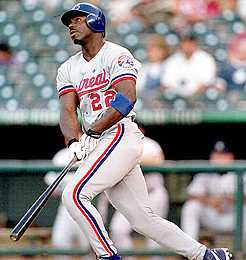
Rondell White

White’s injury-hampered career saw him bat .284 over 15 seasons with 7 teams. As a rookie in 1996, White ruptured his spleen while making a diving catch of a Larry Walker line drive.
                    
Woody Williams

Williams started game 1 of the 2004 World Series and gave up 7 earned runs in 2.1 innings, but inexplicably did not take the loss as the Cards tied the game at 9 in the 8th inning, before losing 11-9. He went 3-1 in 30 games for the 1993 World Champion Toronto Blue Jays.

 
Back in 2003, Seth Davis wrote a column for SI.com in which he stated Jerry Tarkanian should never be enshrined in the Hall of Fame, in short, because “he cheated.” Recently, he reassessed his position. “No. I don’t still feel that way. I believe Tark should go into the Hall of Fame. The reason for my switch has much to do with the passage of time. In the decade that has passed since I wrote those words, I’ve learned a lot about the totality of the historical record, and while I still don’t like the way Tarkanian always fell back on the everybody-did-it defense, there is much truth to his argument.”[iii]

Eventually, the Baseball Hall of Fame voters will come to agree with Davis, if not due to pressure from fans, than due to pressure from the people who run the Hall of Fame museum itself. The Hall of Fame is a museum documenting the history of baseball. It will be impossible to leave out an entire era, or pick a select few to represent the era. On next year’s ballot, Tom Glavine, Greg Maddux, and Frank Thomas will all be inducted. In 2015, Randy Johnson and Pedro Martinez will join the club. In 2016, the Hall will welcome Ken Griffey, Jr. But the Class of 2013 will feature no modern-era inductees. Some of the players we have discussed will be inducted over the next few years, namely Biggio and Bagwell in 2015, but for now, the “Steroid Era” will remain unrepresented.


[i]  In what may have been the greatest World Series performance by a pair of catchers, Florida’s Charles Johnson batted .357 with 10 hits.
[ii] For the record, Glavine's career ERA is 3.54 and Randy Johnson's is 3.29.